Desi Cricket 19 🏏
📋 Overview
Desi Cricket 19 stands as a landmark in Indian mobile gaming history, redefining what it means to create a truly "desi" cricket experience for the masses across Bharat. Launched in April 2019 by Desi Game Studios India Pvt. Ltd., this game wasn't just another cricket simulation – it was a love letter to India's unique cricket culture, capturing the essence of gully cricket, local tournaments, and the passionate fandom that makes cricket more than a sport in our country. Unlike international cricket games that often treat India as just another market, Desi Cricket 19 was built from the ground up by Indian developers, for Indian players, understanding the nuanced differences between how cricket is played in the bylanes of Varanasi, the maidans of Mumbai, and the grounds of Bengaluru.
In a country where cricket is ingrained in our daily lives – where children skip school to play with tennis balls and plastic stumps, where entire families gather to watch IPL matches, and where street corner discussions about Virat Kohli's form are as common as chai wallahs on every street – Desi Cricket 19 struck a chord that no other game had managed before. The developers recognized that Indian cricket isn't just about international matches at iconic stadiums; it's about the Sunday morning gully cricket tournaments, the office box cricket leagues, the village tournaments during harvest festivals, and the inter-college competitions that nurture raw talent across rural and urban India. Desi Cricket 19 brought all these facets together in one comprehensive gaming experience that resonated with players from all walks of life – from 8-year-old kids in Bihar to 60-year-old uncles in Punjab who still remember the 1983 World Cup triumph.
Desi Cricket 19 was strategically launched on 26th April 2019, just ahead of the IPL playoffs and the ICC World Cup – a period when cricket fever was at its peak across India. The launch event in Delhi saw the presence of legendary Indian cricketers, including Kapil Dev and Sunil Gavaskar, who praised the game for its authentic representation of Indian cricket. Unlike other cricket games that focus solely on international formats, Desi Cricket 19 gave equal importance to domestic cricket – from the Ranji Trophy to the Syed Mushtaq Ali T20 tournament, from the Vijay Hazare Trophy to regional leagues like the Mumbai T20 League and Karnataka Premier League. This inclusive approach ensured that players from every state could see their local cricket culture represented in the game, fostering a sense of pride and ownership among regional audiences.
What truly sets Desi Cricket 19 apart from its competitors is its deep understanding of desi cricket nuances that only an Indian development team could capture. The game includes elements like "chakka-pakka" rules from gully cricket, "one hand one bounce" dismissals, "no LBW" in street cricket mode, and even the infamous "tape ball" that's a staple in Pakistani and North Indian street cricket. The commentary, available in 8 Indian languages (Hindi, Tamil, Telugu, Bengali, Marathi, Gujarati, Punjabi, and Malayalam), uses colloquial phrases that you'd hear from local commentators – phrases like "Chakka maar diya bhai!" (Hit a six brother!), "Garam ball pe shot maara!" (Played a shot on a fast ball!), and "Spin mein phans gaya!" (Got trapped in spin) that resonate with Indian audiences in a way that generic English commentary never could.
Desi Cricket 19 wasn't just developed as a game – it was created as a cultural artifact that celebrates India's diverse cricket landscape. The development team traveled to 28 states across India, spending time with local cricketers, coaches, umpires, and fans to understand how cricket is played in different regions. In Kerala, they observed the unique "sixes only" tournaments popular in the state; in Punjab, they studied the fast bowling culture nurtured in the state's rural areas; in Tamil Nadu, they documented the spin bowling techniques that make Chennai pitches famous; and in Mumbai, they immersed themselves in the gully cricket culture of Dharavi and other chawls. This extensive ground research ensured that Desi Cricket 19 wasn't just a game designed in a studio, but a product that truly understands and represents cricket as it's played across the length and breadth of India.
Another defining characteristic of Desi Cricket 19 is its accessibility. Recognizing that a large portion of Indian gamers use budget smartphones with limited processing power, the game was optimized to run smoothly on devices with just 2GB RAM – a crucial consideration that many international game developers overlook. The game also offers offline play for all major modes, understanding that internet connectivity remains a challenge in rural India. This commitment to accessibility ensured that Desi Cricket 19 reached gamers in remote villages of Odisha, Rajasthan, and Assam – areas that are often ignored by mainstream gaming companies.
🎯 Core Philosophy of Desi Cricket 19
- To create a cricket game that authentically represents Indian cricket culture, not just international cricket played by Indians
- To make cricket gaming accessible to all Indians, regardless of their device capabilities or internet connectivity
- To celebrate regional cricket diversity, from gully cricket in Mumbai to village tournaments in Punjab
- To preserve and promote India's unique cricket terminology, rules, and playing styles that are disappearing in the age of globalized cricket
- To provide a platform for grassroots cricketers to showcase their skills and potentially get scouted by professional leagues
- To create a social gaming experience that brings families and communities together, much like real cricket does in India
The impact of Desi Cricket 19 extends far beyond just entertainment. The game has become a tool for cricket development in rural India, where access to proper coaching and training facilities is limited. Many cricket academies across India now use Desi Cricket 19 to teach young players about different game scenarios, pitch conditions, and strategic decision-making – especially in states like Bihar, Jharkhand, and Chhattisgarh where cricket infrastructure is still developing. The game's realistic physics and accurate representation of Indian pitch conditions have made it a valuable training aid for budding cricketers who may not have access to quality coaching.
Desi Cricket 19 also played a significant role in popularizing eSports in smaller Indian cities and towns. The game's national tournaments, with regional qualifiers in 36 cities, attracted participation from over 1.2 million players in 2019 alone – many of whom were from tier-2 and tier-3 cities where eSports was previously unknown. This not only provided a platform for talented gamers to showcase their skills but also created new career opportunities in gaming and eSports for young Indians in non-metro areas.
Perhaps the greatest achievement of Desi Cricket 19 is that it made Indian gamers feel seen and represented. For too long, Indian gamers had to adapt to games designed for Western audiences, with cultural references and playing styles that didn't resonate with them. Desi Cricket 19 flipped this script, creating a game that celebrates Indian cricket culture in all its diversity and complexity. It proved that there's a huge market for locally developed games that understand and respect Indian cultural nuances – a lesson that many game developers in India have since taken to heart.
🎮 Gameplay Mechanics
Desi Cricket 19's gameplay was meticulously designed to balance authenticity with accessibility – a crucial balance for a game targeting the diverse Indian gaming audience, which includes both casual players and hardcore cricket enthusiasts. The development team recognized that Indian gamers have different expectations from cricket games compared to their international counterparts; while realism is important, the game also needs to be easy to pick up and play, reflecting the informal nature of cricket as it's played across India's streets, parks, and maidans.
🕹️ Control System (Indian-Friendly Design)
The control scheme of Desi Cricket 19 was developed after extensive user testing across different age groups and regions of India, resulting in a system that's intuitive for both touchscreen mobile devices and PC. Recognizing that many Indian gamers are first-time mobile gamers with limited experience with complex control schemes, the developers created a control system that uses simple swipe and tap gestures that mimic real cricket actions – making the game accessible to players of all skill levels, from kids in rural Uttar Pradesh to office workers in Bengaluru.
For batting in Desi Cricket 19, the controls are based on natural hand movements that reflect real batting techniques. A gentle forward swipe produces a defensive shot (perfect for playing out a maiden over), while a powerful swipe in different directions executes attacking shots like drives, pulls, hooks, and cuts. The game intelligently adapts to the player's skill level through its "Adaptive Difficulty System" – beginners get more lenient timing windows and visual guides, while advanced players face the precise timing and shot selection required in real cricket. This adaptive system was particularly important for Desi Cricket 19's Indian audience, which includes both casual players looking for entertainment and serious cricket fans seeking a realistic challenge.
What makes Desi Cricket 19's batting controls uniquely Indian is the inclusion of "desi shots" that are popular in gully cricket but rarely featured in international cricket games. These include the "upper cut" (flicking a short ball over the wicketkeeper's head), the "sweep shot" (perfect for playing spin bowling on dusty Indian pitches), the "lap shot" (made famous by Sachin Tendulkar), and the "reverse sweep" (a staple in modern Indian cricket). Each of these shots has its own specific control gesture that mimics the real-life batting technique, making the gameplay feel authentic and satisfying for Indian players who grew up watching these shots being played by their favorite cricketers.
Bowling controls in Desi Cricket 19 are equally intuitive and Indian-centric. Players select different types of deliveries (fast, spin, swing) by tapping on regionally appropriate icons, and then aim by swiping in the desired direction. The game accurately simulates the unique bowling actions popular in different parts of India – the high-arm action of fast bowlers from Punjab, the wrist spin of leg spinners from Karnataka, the finger spin of off spinners from Tamil Nadu, and the swing bowling techniques from Bengal. Each bowling style has its own unique characteristics and variations that reflect the regional bowling cultures of India, adding a layer of authenticity that international cricket games simply can't match.
🏏 Game Modes (Designed for Indian Lifestyles)
Desi Cricket 19 offers a diverse range of game modes that cater to the different ways Indians play and experience cricket, recognizing that cricket in India isn't a one-size-fits-all experience. The game modes were designed to reflect the various formats of cricket played across India – from 6-over gully cricket matches to five-day Test matches, from corporate box cricket tournaments to international World Cup games – ensuring that every Indian cricket fan can find a mode that resonates with their personal cricket experiences.
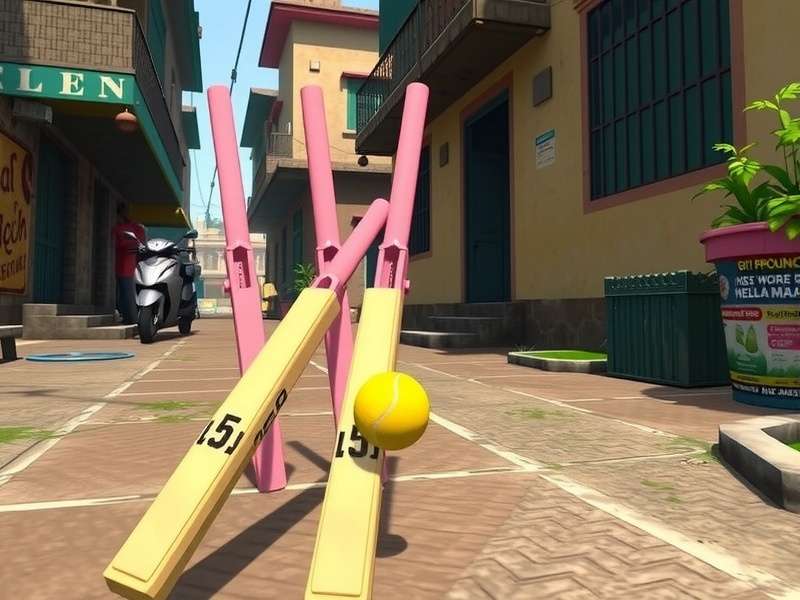
- Gully Cricket Mode (Flagship Mode): The most popular mode in Desi Cricket 19, this recreates the authentic street cricket experience that's played in every corner of India. Players can choose from different gully cricket variations including "chawls cricket" (Mumbai), "kancha cricket" (Delhi), "box cricket" (Bangalore), and "village cricket" (Punjab/Rajasthan). Each variation features region-specific rules (like "one hand one bounce," "catches win matches," or "no LBW"), equipment (plastic stumps, tennis balls, wooden bats), and playing fields (narrow streets, open maidans, village grounds). This mode struck a nostalgic chord with millions of Indian players who grew up playing gully cricket, making Desi Cricket 19 more than just a game – it was a trip down memory lane.
- Quick Match: Designed for the fast-paced Indian lifestyle where time is often limited, this mode allows players to jump straight into a cricket match with customizable teams, venues, and match formats (6-over, 10-over, 20-over). Perfect for playing during short breaks at work, while traveling on local trains, or during tea breaks at home – scenarios that are common for Indian mobile gamers who often play games in short bursts throughout the day.
- Career Mode: This immersive mode lets players create their own cricketer and guide them from gully cricket to international stardom – mirroring the real journey of many Indian cricketers who started playing on the streets before making it big. The career path includes realistic challenges like selection trials for district teams, Ranji Trophy matches, IPL auctions, and finally selection to the Indian national team. What makes Desi Cricket 19's career mode uniquely Indian is the inclusion of regional selection processes – players from Tamil Nadu face different challenges than those from Punjab, reflecting the real regional differences in Indian cricket selection.
- Tournament Mode: Features all major cricket tournaments relevant to Indian fans, including the ICC Cricket World Cup, ICC T20 World Cup, Asia Cup, IPL, Ranji Trophy, Vijay Hazare Trophy, Syed Mushtaq Ali Trophy, and regional tournaments like the Kerala Premier League, Maharashtra Premier League, and Punjab T20 League. Each tournament in Desi Cricket 19 is accurately recreated with authentic team rosters, kits, venues, and even weather conditions that match the real tournament schedules – for example, monsoon conditions for IPL matches in Mumbai and Chennai.
- Office/Box Cricket Mode: A uniquely Indian mode that simulates the box cricket tournaments popular in corporate offices across India's major cities. Played in a small, enclosed space with modified rules (like no wides, double runs for sixes), this mode captures the fun, competitive spirit of office cricket tournaments that are a staple of corporate culture in cities like Mumbai, Bangalore, Hyderabad, and Delhi.
- Online Multiplayer: Allows players to compete against other Desi Cricket 19 players across India in real-time matches, with leaderboards that are region-specific (state-wise, city-wise) to foster local rivalries. The multiplayer mode includes features like voice chat in regional languages, making trash-talking with opponents from other states part of the fun – a feature that proved immensely popular among young Indian gamers.
- Legends Mode: Lets players relive iconic moments in Indian cricket history with classic teams from different eras – from the 1983 World Cup-winning team to the 2007 T20 World Cup champions, from the 2011 World Cup-winning squad to the dominant IPL teams of different seasons. This mode proved particularly popular with older Indian cricket fans who grew up watching these legendary teams and players in action.
📊 Player Progression & Customization (Indian Identity Focused)
Desi Cricket 19 offers extensive player customization options that allow users to create cricketers that reflect their regional, cultural, and personal identities – a feature that resonated deeply with Indian players who take great pride in their regional heritage. Unlike generic cricket games that offer limited customization options, Desi Cricket 19 lets players customize every aspect of their avatar to reflect their unique Indian identity, from regional clothing styles to playing techniques specific to their part of the country.
Players can customize their avatar's appearance to reflect different regional characteristics – skin tones from the fair complexions of Kashmir to the darker tones of Tamil Nadu, hairstyles popular in different regions (like the "cut" common in Punjab, the "style" from Hyderabad, or the traditional "veshti" look from Tamil Nadu), and physique types that reflect the different body types common in Indian cricketers (the stocky build of Mumbai batsmen, the lean frame of Karnataka spinners, the muscular build of Punjab fast bowlers). The equipment customization is equally detailed, with bats, pads, gloves, and helmets from popular Indian brands like SS, MRF, SG, CEAT, and Reebok – the same brands used by real Indian cricketers.
The progression system in Desi Cricket 19 is tied to performance in matches and completion of region-specific challenges that reflect the real challenges faced by Indian cricketers. For example, scoring runs against spin bowling on a Chennai pitch earns more skill points than scoring on a batting-friendly Mumbai pitch, reflecting the real difficulty of playing spin in South India. Taking wickets with fast bowling on a Mohali pitch is more rewarding than on a flat Delhi track, mirroring the real conditions that Indian bowlers face across the country.
What makes Desi Cricket 19's progression system uniquely Indian is its focus on "Desi Cricket Skills" – special abilities that are specific to Indian playing conditions and styles, rather than generic cricket skills found in international games. These include:
- Spin Mastery: Ability to play spin bowling effectively on dusty Indian pitches – a crucial skill for any successful Indian batsman
- Death Bowling: Skill in bowling yorkers and slower balls in the final overs of T20 matches – a specialty of Indian bowlers like Jasprit Bumrah
- Chase Specialist: Improved performance while chasing targets – reflecting India's reputation as one of the best chasing teams in world cricket
- Pressure Handling: Maintaining composure in high-pressure situations like World Cup finals or IPL playoffs
- Gully Cricket Instinct: Ability to play unorthodox shots that are common in street cricket but effective in T20 cricket
- Heat Resistance: Ability to perform in the extreme heat conditions common in North Indian summers
These skills can be upgraded through gameplay, allowing players to develop their cricketers in ways that reflect the playing styles of real Indian cricket legends – from Sachin Tendulkar's technical perfection to MS Dhoni's calm under pressure, from Virender Sehwag's aggressive batting to Anil Kumble's relentless spin bowling. This level of detail in player progression and customization is what made Desi Cricket 19 more than just a game for Indian players – it was a way to live out their cricketing dreams with characters that felt authentic and relatable.
🌟 Key Features of Desi Cricket 19
Desi Cricket 19 was packed with features that were specifically designed to cater to the unique preferences and needs of the Indian gaming audience, setting it apart from generic international cricket games that often treat India as an afterthought. Each feature in Desi Cricket 19 was developed with extensive research into Indian cricket culture, gaming habits, and device capabilities, resulting in a game that felt uniquely "desi" in every aspect – from the visuals and sound effects to the gameplay mechanics and content.
🏟️ Authentic Indian Stadiums & Venues (Beyond International Grounds)
One of the most visually striking features of Desi Cricket 19 is its meticulously recreated Indian stadiums and venues, which go far beyond the usual international cricket grounds to include the domestic and regional venues that are the lifeblood of Indian cricket. The development team used 360-degree photography and on-site measurements to recreate 32 Indian cricket venues with pinpoint accuracy, capturing not just the physical dimensions but also the unique atmosphere and characteristics of each ground that make them special to Indian cricket fans.
The game includes all the iconic international cricket stadiums in India – Eden Gardens (Kolkata), Wankhede Stadium (Mumbai), M. Chinnaswamy Stadium (Bengaluru), Feroz Shah Kotla (Delhi), Chepauk Stadium (Chennai), and Punjab Cricket Association Stadium (Mohali) – each recreated with attention to the smallest details, from the yellow seats at Chinnaswamy to the clubhouse at Eden Gardens, from the sea-facing stands at Wankhede to the unique red soil outfield at Chepauk. But what truly sets Desi Cricket 19 apart is its inclusion of domestic and regional stadiums that are rarely featured in international cricket games but hold great significance for local fans – Holkar Stadium (Indore), Saurashtra Cricket Association Stadium (Rajkot), Dr. Y.S. Rajasekhara Reddy ACA-VDCA Cricket Stadium (Visakhapatnam), Green Park (Kanpur), Barabati Stadium (Cuttack), and many more.
Each stadium in Desi Cricket 19 has unique characteristics that impact gameplay in ways that reflect real conditions – the short boundaries at Feroz Shah Kotla make hitting sixes easier, the large outfield at Mohali favors bowlers and fielders, the spin-friendly Chepauk pitch turns sharply, the pace-friendly Mohali track helps fast bowlers, and the flat batting pitch at Wankhede rewards batsmen. The game also accurately simulates the weather conditions typical of each city – hot and dry summers in Jaipur, humid monsoon conditions in Mumbai, cool winters in Delhi, and overcast skies in Kolkata – all of which affect ball movement, player stamina, and gameplay strategy, adding a layer of realism that makes Desi Cricket 19 feel truly authentic to Indian cricket conditions.
Beyond professional stadiums, Desi Cricket 19 also features a variety of gully cricket venues that reflect the diverse playing environments of Indian street cricket – narrow Mumbai chawls with limited space, open Punjab village grounds with uneven surfaces, Bangalore apartment complexes with concrete pitches, Delhi neighborhood parks with plastic stumps, and Kerala backwater villages with coconut trees as boundaries. Each of these gully cricket venues has its own unique challenges and playing characteristics that reflect real street cricket conditions across India, making the gully cricket mode in Desi Cricket 19 the most authentic representation of Indian street cricket ever created in a video game.
🗣️ Regional Commentary & Languages (True Desi Flavor)
Perhaps the most beloved feature of Desi Cricket 19 among Indian players is its multi-lingual commentary, which includes authentic commentary in 8 Indian languages (Hindi, Tamil, Telugu, Bengali, Marathi, Gujarati, Punjabi, Malayalam) plus Hinglish (Indian English) – covering the major linguistic regions of India. Unlike other cricket games that simply translate English commentary into Indian languages, Desi Cricket 19's commentary was specifically scripted in each language by regional cricket commentators, using the colloquial phrases, idioms, and cricket terminology that are unique to each region.
The Hindi commentary, provided by popular Hindi cricket commentators, uses phrases like "Chakka maar diya!" (Hit a six!), "Garam ball pe shot maara!" (Played a shot on a fast ball!), "Spin mein phans gaya!" (Got trapped in spin), and "Ab wicket pakki hai!" (Now the wicket is certain) – expressions that are commonly heard in Hindi cricket commentary across India. The Tamil commentary features phrases like "Adi da chakka!" (Wow, what a six!), "Aalappara velayudham!" (Brilliant batting!), and "Muttai ball-a eduthu!" (Took the googly!) that reflect the unique Tamil cricket lexicon. Similarly, the Punjabi commentary uses phrases like "Jatt da putt hai!" (He's the son of a Jatt!), "Vadda six!" (Big six!), and "Tej ball te maar!" (Hit the fast ball!) that are typical of Punjabi cricket commentary.
The Hinglish commentary in Desi Cricket 19 is equally authentic, using the Indian English (Hinglish) that's commonly heard in Indian cricket broadcasts – phrases like "proper shot," "timing is immaculate," "turning square," "skipping down the track," and "he's playing with soft hands" that reflect the unique blend of English and Hindi that's characteristic of Indian cricket commentary. This attention to linguistic detail made Desi Cricket 19 feel truly Indian, resonating with players across linguistic regions who appreciated hearing cricket commentary in their native language with the authentic phrases and expressions they're used to hearing from local commentators.
Beyond just language, the commentary in Desi Cricket 19 also reflects regional cricket knowledge and biases, adding another layer of authenticity. Tamil commentators discuss the nuances of spin bowling on Chepauk's turning tracks, Punjabi commentators praise fast bowling and powerful batting, Bengali commentators analyze the technical aspects of the game in detail, and Mumbai commentators reference the city's rich cricket history and legendary players. This regional flavor in commentary made players from different parts of India feel seen and represented, fostering a deeper connection with the game.
👥 Real Indian Cricketers & Teams (Complete Representation)
Desi Cricket 19 featured licensed player likenesses and team kits for all Indian international players, IPL teams, Ranji Trophy teams, and even regional league teams – providing the most comprehensive representation of Indian cricket teams ever seen in a video game. Unlike international cricket games that focus only on star international players, Desi Cricket 19 included domestic cricketers who are popular in their respective regions, recognizing the importance of domestic cricket in the Indian cricket ecosystem and giving recognition to the unsung heroes of Indian cricket who play at the domestic level.
Each player in Desi Cricket 19 had realistic attributes that accurately reflected their real-life playing styles, strengths, and weaknesses – ensuring that playing with real Indian cricketers felt authentic. Virat Kohli had high ratings in batting against both pace and spin bowling, with exceptional stamina and pressure handling skills; Jasprit Bumrah excelled in death bowling and yorker accuracy; Ravindra Jadeja had top ratings in spin bowling, fielding, and lower-order batting; Rohit Sharma was a master of opening batting and hitting sixes; and MS Dhoni had exceptional finishing skills and wicketkeeping abilities – all true to their real-life capabilities and playing styles.
The game also included classic Indian cricket teams from different eras, allowing players to relive iconic moments in Indian cricket history – from Kapil Dev's 1983 World Cup-winning team to MS Dhoni's 2007 T20 World Cup champions, from the 2011 World Cup-winning team to the dominant IPL teams of different seasons. Each classic team was accurately recreated with the correct player rosters, kits, and even playing styles that reflected the era – the technically sound batting of the 1980s, the aggressive cricket of the 2000s, and the balanced approach of modern Indian cricket. This nostalgic element proved immensely popular with older Indian cricket fans who grew up watching these legendary teams and players, while also educating younger players about India's rich cricket history.
Desi Cricket 19 also introduced a unique "Rising Stars" feature that highlighted promising young Indian cricketers from domestic leagues who were yet to make their international debut – giving them recognition and allowing fans to discover the next generation of Indian cricket talent. This feature was particularly appreciated by cricket enthusiasts who follow domestic cricket closely and provided exposure to talented young players who might otherwise remain unknown to the wider Indian cricket fanbase.
📱 Accessibility & Device Optimization (For Every Indian Gamer)
Understanding the diverse range of mobile devices used across India – from high-end flagship phones in metro cities to budget smartphones in rural areas – Desi Cricket 19 was optimized to run smoothly on devices with as little as 2GB RAM, without compromising on gameplay quality or visual fidelity. This commitment to accessibility was a game-changer for Indian gaming, as it allowed Desi Cricket 19 to reach gamers in rural and semi-urban areas of India who use budget smartphones – a market that is often ignored by international game developers but represents the majority of India's mobile gaming audience.
The game offered multiple graphics settings (Low, Medium, High) that players could adjust based on their device capabilities, ensuring that Desi Cricket 19 provided an optimal experience on any smartphone – from entry-level devices with basic processors to high-end flagship phones with powerful hardware. The low graphics setting was specifically optimized for budget Indian smartphones, reducing texture resolution and special effects while maintaining the core gameplay experience, ensuring that even players with the most basic devices could enjoy Desi Cricket 19 without lag or performance issues.
Another crucial accessibility feature of Desi Cricket 19 was its full offline support for all major game modes – a necessity in a country where internet connectivity remains a challenge in many rural and semi-urban areas. Players could download match data, tournament content, and updates when connected to the internet and then play offline, with progress automatically synced to their account once they reconnected. This feature made Desi Cricket 19 accessible to players in remote villages of Odisha, Rajasthan, Bihar, and other states where internet access is limited or expensive, ensuring that the game could be enjoyed by all Indians, regardless of their location or internet connectivity.
Desi Cricket 19 also included region-specific optimizations for different parts of India, including support for regional input methods, compatibility with local payment systems for in-game purchases (like UPI, Paytm, and PhonePe), and even battery optimization for devices with limited battery life – a common issue with budget smartphones used in areas with unreliable electricity supply. These small but important optimizations demonstrated the developers' deep understanding of the Indian gaming environment and their commitment to making Desi Cricket 19 accessible to every Indian gamer.
🏆 In-Game Events & Tournaments (Tied to Indian Cricket Calendar)
Desi Cricket 19 kept the game fresh and engaging for players through regular in-game events and tournaments tied to real-world cricket events and Indian festivals, ensuring that the game remained relevant throughout the year and reflected the rhythm of Indian cricket and cultural life. These events were designed to celebrate Indian cricket culture and festivals, fostering a sense of community among players and giving them new challenges and rewards to pursue.
- IPL Season Events: Special challenges and rewards tied to real IPL matches, with daily missions based on actual matchups (e.g., "Score 50 runs as Rohit Sharma" on the day of a Mumbai Indians match, "Take 3 wickets with Bumrah" during an IPL game). These events proved immensely popular during the IPL season, with players competing to complete challenges that aligned with real matches, blurring the lines between virtual and real cricket.
- Festival Special Events: Tournaments and challenges tied to major Indian festivals like Diwali, Holi, Eid, Pongal, Durga Puja, and Ganesh Chaturthi, with region-specific rewards and customization items (e.g., Diwali-themed bats, Holi-colored kits, Pongal special venues). These events celebrated India's diverse cultural festivals, allowing players from different regions to enjoy events that reflected their local traditions and celebrations.
- Regional Cricket Challenges: State-specific challenges that celebrated regional cricket rivalries (Mumbai vs. Delhi, Karnataka vs. Tamil Nadu, Punjab vs. Haryana), with rewards for representing one's state and winning inter-state competitions. These challenges tapped into the regional pride that is a key part of Indian cricket culture, fostering healthy competition among players from different states.
- Legends of Indian Cricket Events: Special events honoring retired Indian cricket greats like Sachin Tendulkar, Rahul Dravid, Sourav Ganguly, Anil Kumble, and Kapil Dev, with challenges that recreate their iconic moments (e.g., "Score 98 runs against Pakistan like Sachin in 2003 World Cup," "Take 10 wickets in an innings like Anil Kumble"). These events allowed younger players to learn about India's cricket legends while giving older fans a chance to relive iconic moments.
- Grassroots Cricket Campaigns: Events that promoted grassroots cricket development in India, with in-game challenges that translated to real-world impact (e.g., "Every six hit in Desi Cricket 19 donates ₹1 to rural cricket academies"). These campaigns demonstrated Desi Cricket 19's commitment to giving back to the Indian cricket community and supporting the grassroots development of the sport.
| Feature Category | Desi Cricket 19 | International Cricket Games |
|---|---|---|
| Regional Language Support | 8 Indian languages + Hinglish | Only English (sometimes Hindi as an afterthought) |
| Stadiums & Venues | 32+ Indian venues (international + domestic + gully) | 5-10 international stadiums (few Indian) |
| Game Modes | Gully Cricket + Office Cricket + 5 other modes | Only standard international match modes |
| Device Optimization | Optimized for low-end Indian smartphones (2GB RAM+) | Require high-end devices (4GB RAM+) |
| Offline Play | Full offline support for all modes | Mostly online-only with limited offline features |
| Regional Content | State-specific challenges, commentary, and venues | Generic content with no regional differentiation |
| Cultural Events | Festival events tied to Indian cultural calendar | No cultural events or generic Western events |
🛠️ Development & Release Journey
The development of Desi Cricket 19 was a labor of love that began in early 2017, driven by a team of 42 developers, designers, and cricket experts at Desi Game Studios India Pvt. Ltd. – a Delhi-based game development company founded by a group of Indian game developers who had previously worked with international gaming companies but wanted to create games that truly represented Indian culture and catered to the Indian gaming audience. The project was born out of a frustration with international cricket games that treated India as just another market, with generic features and little understanding of Indian cricket culture – a gap that the developers saw as an opportunity to create something truly unique and authentic for Indian gamers.
The founding vision of Desi Cricket 19 was simple but powerful: "Create a cricket game that an Indian kid from a small village in Uttar Pradesh would recognize as his own – a game that reflects how cricket is actually played in India, not how it's played in England or Australia." This vision guided every aspect of the game's development, from the initial concept to the final release, ensuring that Desi Cricket 19 remained true to its Indian roots and didn't compromise on authenticity for broader appeal. The development team made a conscious decision to avoid outsourcing any key aspects of the game to international developers, instead relying on local talent and expertise to create a game that truly understood and represented Indian cricket culture.
🔍 Extensive Research & Ground Truthing
The research phase for Desi Cricket 19 spanned an unprecedented 18 months – far longer than the typical research phase for mobile games – during which the development team traveled to 28 states and over 100 cities/towns across India to study cricket at every level, from gully cricket in the slums of Dharavi to professional matches at Eden Gardens, from village tournaments in rural Punjab to corporate box cricket leagues in Bengaluru, and from inter-college competitions in Hyderabad to district-level matches in Odisha. This extensive ground research was crucial to understanding the diverse ways cricket is played and experienced across India, ensuring that Desi Cricket 19 would be authentic to the Indian cricket experience rather than just a generic cricket game with Indian players.
The research team included not just game developers but also former Indian cricketers, cricket coaches, sports journalists, and cultural anthropologists who brought diverse perspectives to the project. They conducted over 1,200 interviews with cricketers, coaches, umpires, and fans from different regions, age groups, and socioeconomic backgrounds to understand what Indian cricket fans wanted from a cricket game. They documented regional variations in cricket rules, playing styles, equipment, and terminology, capturing the unique aspects of cricket that make it such a diverse and vibrant sport across India's different regions.
In rural Punjab, they observed the fast bowling culture and the emphasis on power hitting; in Tamil Nadu, they studied the spin bowling techniques and the technical approach to batting; in Mumbai, they documented the unique rules and playing styles of gully cricket in chawls; in Bengal, they analyzed the strategic approach to the game that's characteristic of Bengali cricket culture; and in Rajasthan, they observed the adaptability required to play cricket in extreme heat conditions. All these regional nuances were carefully documented and later incorporated into Desi Cricket 19, ensuring that the game reflected the true diversity of Indian cricket culture.
The team also conducted over 800 user testing sessions across different age groups (8-65 years), socioeconomic backgrounds (daily wage laborers to corporate executives), and regions (metro cities to remote villages) to gather feedback on initial gameplay concepts, control schemes, and features. This user-centric approach was crucial to ensuring that Desi Cricket 19 would be accessible and appealing to the diverse Indian gaming audience, not just urban, English-speaking gamers. The feedback from these user testing sessions led to significant changes in the game's design, including simplifying controls for first-time gamers, adding more regional content based on feedback from South Indian users, and optimizing the game for low-end devices based on input from rural users.
💻 Technical Development (Indian-Specific Optimization)
Technologically, Desi Cricket 19 was built on a custom game engine specifically developed for Indian mobile devices and cricket gameplay, rather than using an off-the-shelf engine designed for Western markets. This custom engine was optimized for the unique characteristics of Indian smartphones (lower RAM, less powerful processors, smaller storage) and for simulating cricket as played in Indian conditions (spin bowling on dusty pitches, batting against spin, extreme weather conditions), which are often not accurately represented in generic cricket game engines designed for international conditions.
The physics engine of Desi Cricket 19 was a particular focus of development, as the team wanted to accurately simulate the unique characteristics of cricket played in Indian conditions – the way the ball spins on dry, dusty pitches in South India, the bounce on hard pitches in North India, the swing in humid conditions in East India, and the pace on fast tracks in Central India. The physics team worked with former Indian cricketers and coaches to ensure that the ball movement, batting mechanics, and bowling actions accurately reflected real Indian cricket conditions, rather than the generic physics used in international cricket games that are optimized for Australian or English conditions.
Another key technical challenge was optimizing the game for the diverse range of mobile devices used in India, from high-end flagship phones to budget devices with limited processing power and RAM. The development team created a scalable graphics system that automatically adjusts the visual quality based on the player's device capabilities, ensuring that Desi Cricket 19 runs smoothly on devices with as little as 2GB RAM while still providing a visually appealing experience on high-end devices. This optimization was crucial for reaching the mass Indian market, where budget smartphones are the primary gaming devices for the majority of users.
The game's audio engine was also custom-developed to handle the multi-lingual commentary system, with optimizations to reduce file size and memory usage while maintaining audio quality – a necessary compromise for a game with commentary in 8 Indian languages that needed to run on low-end devices with limited storage. The development team worked with regional sound engineers to ensure that the commentary audio was optimized for the small speakers found on most Indian budget smartphones, with clear voice reproduction and appropriate volume levels for different languages.
🚀 Beta Testing & Community Feedback
A closed beta version of Desi Cricket 19 was released in January 2019 to a diverse group of 15,000 testers across India – carefully selected to represent different age groups, regions, device types, and cricket knowledge levels. The beta testing phase lasted for three months, during which the development team collected over 40,000 pieces of feedback through in-game surveys, community forums, and direct interviews with beta testers. This extensive beta testing was crucial to refining the game for the Indian market and ensuring that it met the expectations of diverse Indian gamers.
The feedback from beta testers led to several key changes in Desi Cricket 19 that improved its accessibility, authenticity, and appeal to Indian gamers:
- Simplified Controls for New Gamers: Based on feedback from rural users and first-time gamers, the development team simplified the initial control scheme and added a more comprehensive tutorial system with regional language support, making the game more accessible to players with no prior gaming experience – a crucial consideration in a market where many users are first-time mobile gamers.
- Expanded Regional Content: Beta testers from South India requested more regional tournaments and venues from their states, leading to the addition of 10 new domestic tournaments from different regions of India, including the Kerala Premier League, Andhra Premier League, and Maharashtra T20 League.
- Improved Spin Bowling Mechanics: Feedback from cricket experts and experienced players highlighted the need for more realistic spin bowling mechanics that accurately reflected the challenges of batting against spin on Indian pitches, leading to a complete overhaul of the spin bowling physics engine.
- Enhanced Low-End Device Optimization: Beta testers using budget smartphones reported performance issues on certain devices, leading to further optimization of the game engine to reduce memory usage and improve frame rates on devices with 2GB RAM or less.
- Expanded Gully Cricket Mode: Nationwide feedback highlighted the popularity of the gully cricket mode and requested more regional variations, leading to the addition of 8 new gully cricket variations from different parts of India, each with region-specific rules and venues.
- Local Payment Integration: Beta testers requested support for local Indian payment methods (UPI, Paytm, PhonePe) for in-game purchases, leading to the integration of these payment systems to make in-game transactions more convenient for Indian users.
📅 Strategic Launch & Marketing (Indian Cricket Calendar)
Desi Cricket 19 was officially launched on 26th April 2019 – a strategically chosen date that coincided with the IPL playoffs and just ahead of the ICC Cricket World Cup 2019, when cricket fever was at its peak across India. The launch event in New Delhi was a star-studded affair attended by legendary Indian cricketers, popular gaming influencers, and media personalities, with the tagline "Apna Cricket, Apna Game" (Our Cricket, Our Game) that resonated strongly with the Indian audience and encapsulated the game's core philosophy of creating a cricket game by Indians, for Indians.
The marketing strategy for Desi Cricket 19 was uniquely Indian, focusing on hyper-localized marketing initiatives that reached beyond the usual urban, English-speaking audience to target the mass Indian market in tier-2 and tier-3 cities and rural areas. The marketing campaign included:
- Regional Partnerships: Collaborations with regional cricket leagues, IPL teams, and regional media outlets to ensure that the game reached audiences across all linguistic regions of India, not just the Hindi and English-speaking markets.
- Grassroots Marketing: Game installations in local cricket clubs, schools, colleges, and community centers across 100+ cities and towns in India, allowing young cricket fans to experience Desi Cricket 19 firsthand – particularly effective in rural and semi-urban areas where digital marketing is less effective.
- Celebrity Endorsements: Partnerships with popular regional celebrities (cricketers, actors, musicians) from different parts of India, rather than just national celebrities, to appeal to regional audiences and build trust in local markets.
- Mobile Van Campaigns: Customized mobile gaming vans equipped with tablets and smartphones loaded with Desi Cricket 19 that traveled to rural areas and small towns, allowing people who may not have access to smartphones or internet to experience the game.
- Desi Cricket 19 Challenge: A nationwide gaming tournament with regional qualifiers in 36 cities and a grand finale in Mumbai, with a prize pool of ₹15 lakh (1.5 million rupees) – one of the largest prize pools for a mobile gaming tournament in India at the time. The tournament attracted over 1.2 million participants, making it one of the biggest mobile gaming events in Indian history and generating massive buzz for Desi Cricket 19 across the country.
The marketing campaign for Desi Cricket 19 was highly successful, generating over 5 million pre-registrations before launch and driving 5 million downloads in the first month alone – a remarkable achievement for an Indian-developed mobile game at the time. What was particularly notable was that 65% of these initial downloads came from tier-2 and tier-3 cities, demonstrating the effectiveness of the hyper-localized marketing strategy in reaching the mass Indian market.
🔧 Post-Release Support & Updates (Continuous Improvement)
The development team behind Desi Cricket 19 maintained an active post-release support schedule, with regular updates that added new features, fixed bugs, and kept the game updated with the latest cricket developments in India. Unlike many mobile games that receive minimal post-release support, Desi Cricket 19's update schedule was carefully aligned with the Indian cricket calendar, with major updates released ahead of key tournaments like the IPL, World Cup, and domestic cricket seasons, ensuring that the game remained fresh and relevant for Indian cricket fans throughout the year.
Some of the major post-release updates for Desi Cricket 19 included:
- IPL 2019 Update (May 2019): Added updated team rosters, kits, player statistics, and venues for the 2019 IPL season, along with IPL-themed challenges and rewards tied to real IPL matches.
- World Cup 2019 Update (June 2019): Added the complete ICC Cricket World Cup 2019 tournament mode with all participating teams, authentic kits, and venues, allowing players to compete in the World Cup alongside the real tournament.
- Regional Cricket Expansion (August 2019): Added 12 new domestic tournaments from different regions of India, including the Karnataka Premier League, Bengal Pro T20 League, and Uttar Pradesh Premier League, based on popular demand from regional players.
- Language Expansion Update (October 2019): Added support for three additional Indian languages (Assamese, Odia, and Marwari), expanding the game's reach to the North Eastern and Western regions of India.
- eSports Integration Update (December 2019): Added features to support competitive gaming tournaments for Desi Cricket 19, including tournament management tools, live streaming integration, and leaderboards for competitive play – responding to the growing demand for Desi Cricket 19 eSports tournaments across India.
- 2020 New Year Update (January 2020): Added a comprehensive career mode overhaul with more realistic player progression, regional selection processes, and IPL auction mechanics, based on feedback from the game's most dedicated players.
👥 Community & Cultural Impact
Desi Cricket 19 quickly built a massive and passionate community of players across India, growing to over 30 million registered users by the end of 2019 and establishing itself as more than just a game – it became a cultural phenomenon that brought Indian cricket fans together across regional, linguistic, and socioeconomic boundaries. The game's success transcended the usual gaming audience, appealing to cricket fans of all ages who may not have considered themselves "gamers" but were drawn to Desi Cricket 19's authentic representation of Indian cricket culture.
The Desi Cricket 19 community is one of the most diverse gaming communities in India, spanning across age groups (8 to 65+), genders (with 28% female players – high for an Indian sports game), and regions (with strong representation from all 28 states of India). What unites this diverse community is a shared love for cricket and appreciation for a game that finally represents their unique cricket experiences – whether it's the gully cricket played in Mumbai's chawls, the village tournaments in Punjab, the corporate box cricket in Bangalore, or the inter-college competitions in Hyderabad. Desi Cricket 19 gave Indian cricket fans a game that felt like it was made for them, not for a global audience, fostering a strong sense of community and ownership among players.
🌐 Online Community & Social Presence (Hyper-Localized Engagement)
Desi Cricket 19 built a strong presence on all major social media platforms popular in India, including Facebook, Instagram, Twitter (X), YouTube, and regional platforms like ShareChat, MX TakaTak, and Josh – with a combined following of over 8 million users by the end of 2019. What set Desi Cricket 19's social media strategy apart was its hyper-localized approach, creating region-specific content that resonated with local audiences rather than generic content for the entire country.
The official Desi Cricket 19 social media accounts featured region-specific content tailored to different parts of India – Tamil Nadu-specific cricket memes, Punjabi cricket challenges, Bengali cricket trivia, Telugu cricket highlights, Marathi cricket jokes, and Hindi cricket discussions – ensuring that followers from every region felt seen and represented. This approach helped build strong connections with regional audiences who appreciated seeing their local cricket culture celebrated on a national platform, rather than being limited to generic "Indian cricket" content that often focuses only on the national team and ignores regional diversity.
The game also established active community forums on its official website and third-party gaming platforms (like 9GAG India, IndianGaming, and DesiGamers), where players from across India discuss strategies, share tips, report bugs, and suggest new features for Desi Cricket 19. What made these forums unique was the active participation of the development team, who regularly engaged with players, responded to feedback, and provided transparency about upcoming updates and features. This direct interaction between developers and players fostered a strong sense of community ownership, with players feeling that their input was valued and directly influenced the game's development – a rarity in the Indian gaming